
LAND STORIES
SOIL UNDERNEATH OUR FEET
TEXT: JENNY GUSTAFSSON
PHOTOS: JENNY GUSTAFSSON
RESEARCH: YARA WARD, ANGELA SAADE
EDITS: NISREEN KAJ
Caring for the land in South Lebanon with Hadi Awada
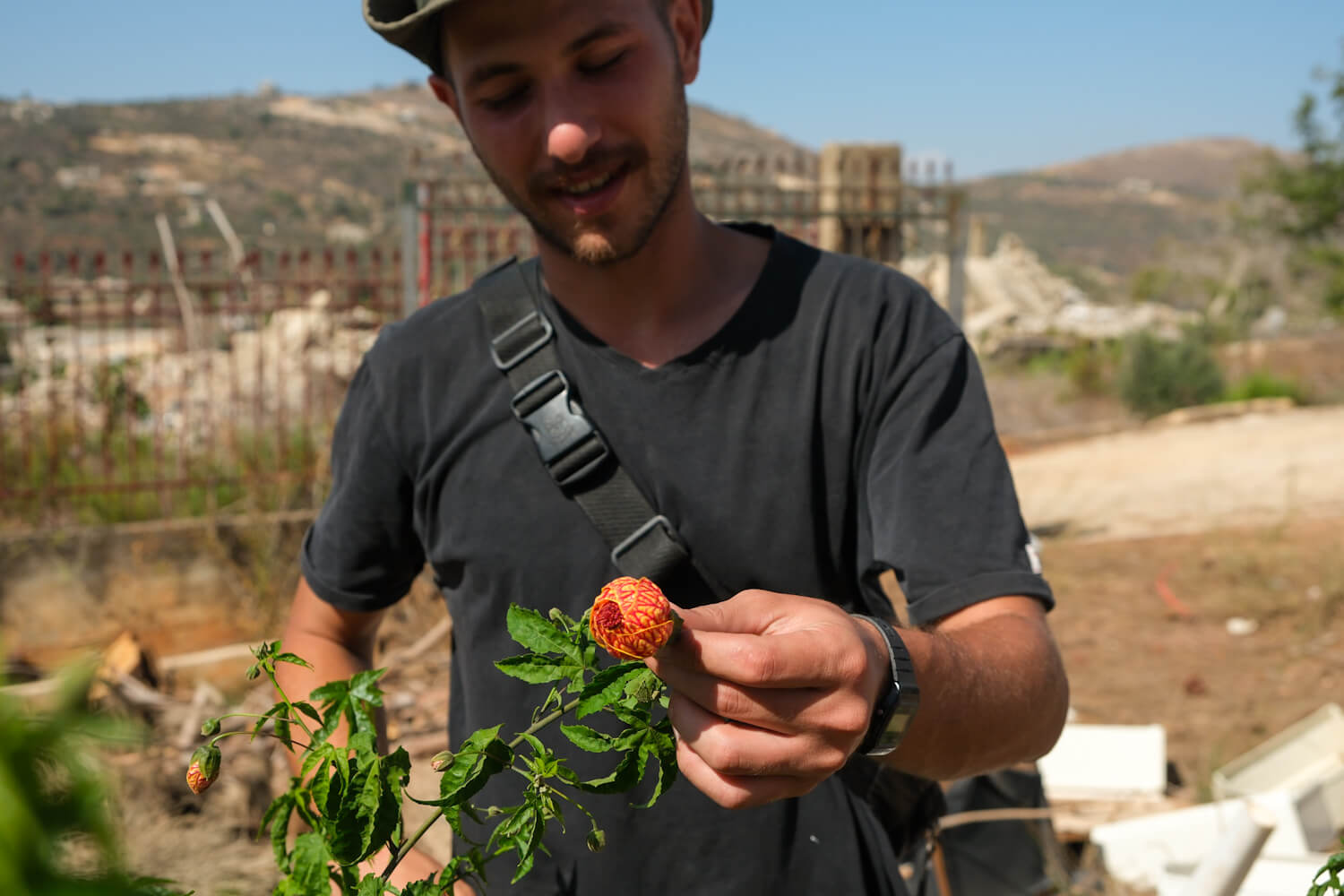
HADI AWADA HOLDING AN ABUTILON FLOWER BUD
“It’s edible. You can eat the leaves. But I wouldn’t do it; they probably absorbed a lot of heavy metals.”
Hadi Awada, wearing a black t-shirt and a cotton hat, holds up a bright orange flower bud shaped like a ball. He is standing in the garden of his family home in Kfarkela, a village right on the southern Lebanese border.
The small garden used to have all kinds of plants, including tall pine trees planted by Hadi’s family over 25 years ago. Now, except for the flower in his hand and a few other surviving plants, the land is entirely empty of life. Kfarkela is one of several villages on the border that have been almost completely destroyed by Israeli attacks following 7 October 2023.
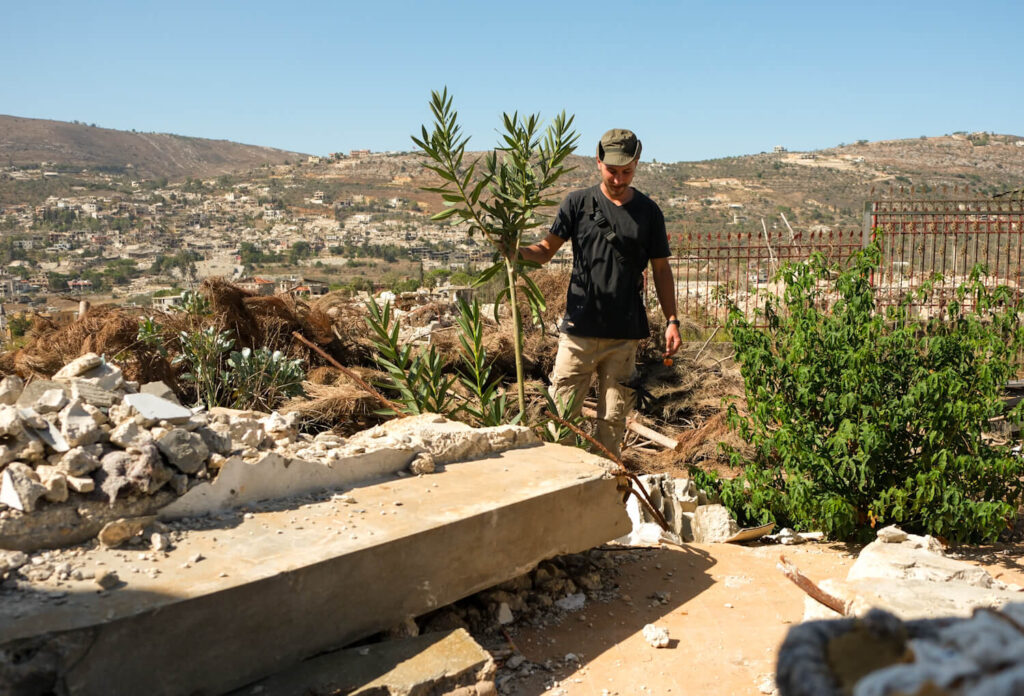
“Our village is one of the worst hit. Almost every single house is gone,” Hadi says as he walks through the debris in the garden.
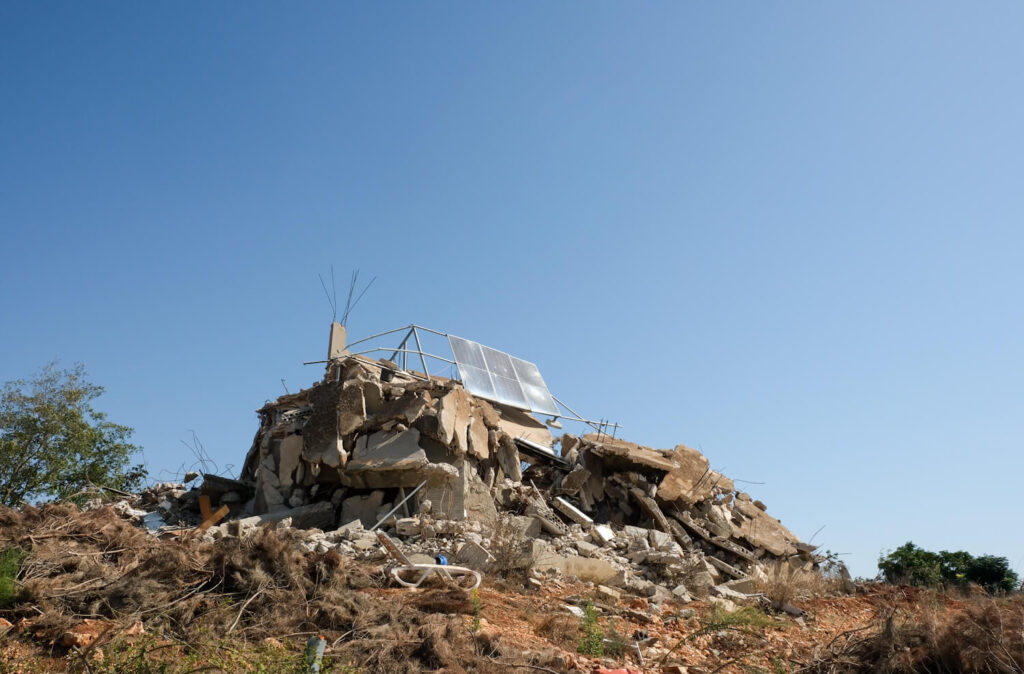
Behind him is what used to be the family home, built by his mother’s family in 1982. Now, all that remains is an enormous pile of broken pieces. Here and there, rebar sticks out like spider legs. On the roof, broken solar panels reflect the rays of the sun.
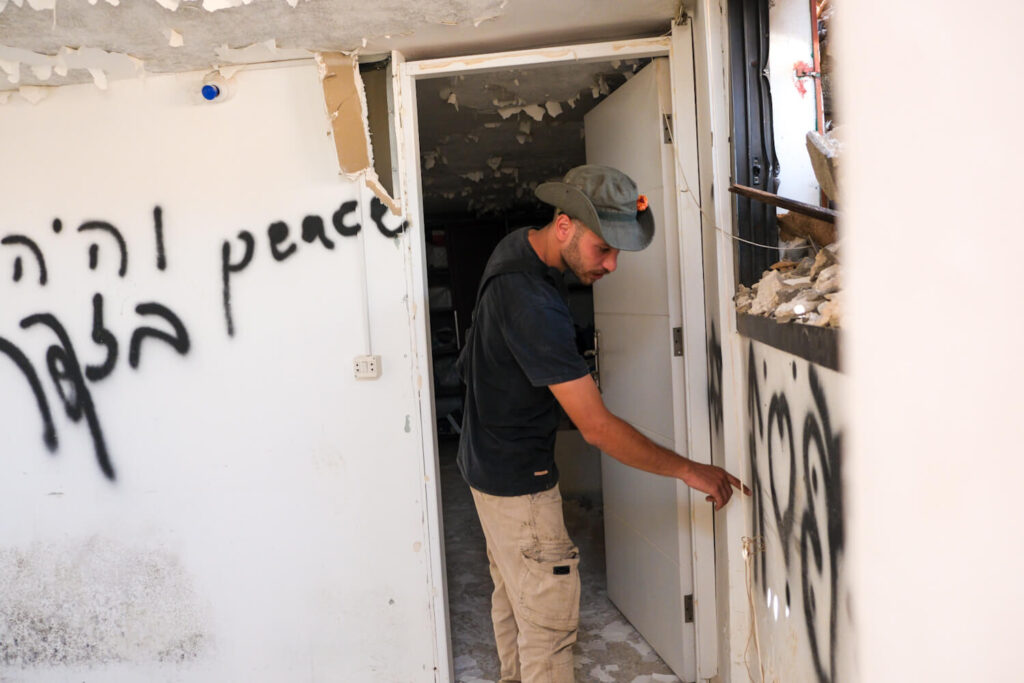
The Israeli army, when starting its ground invasion of the south, entered the house, used it as a base, and eventually destroyed it before leaving. Scribbled on the walls inside are the names of soldiers and their schedules of duty.
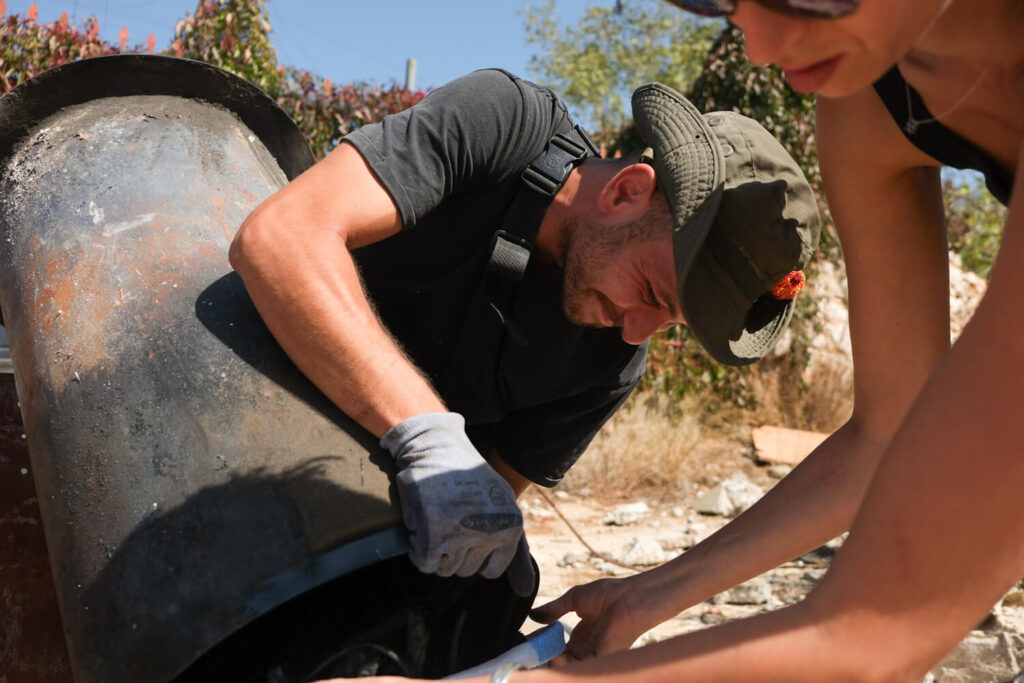
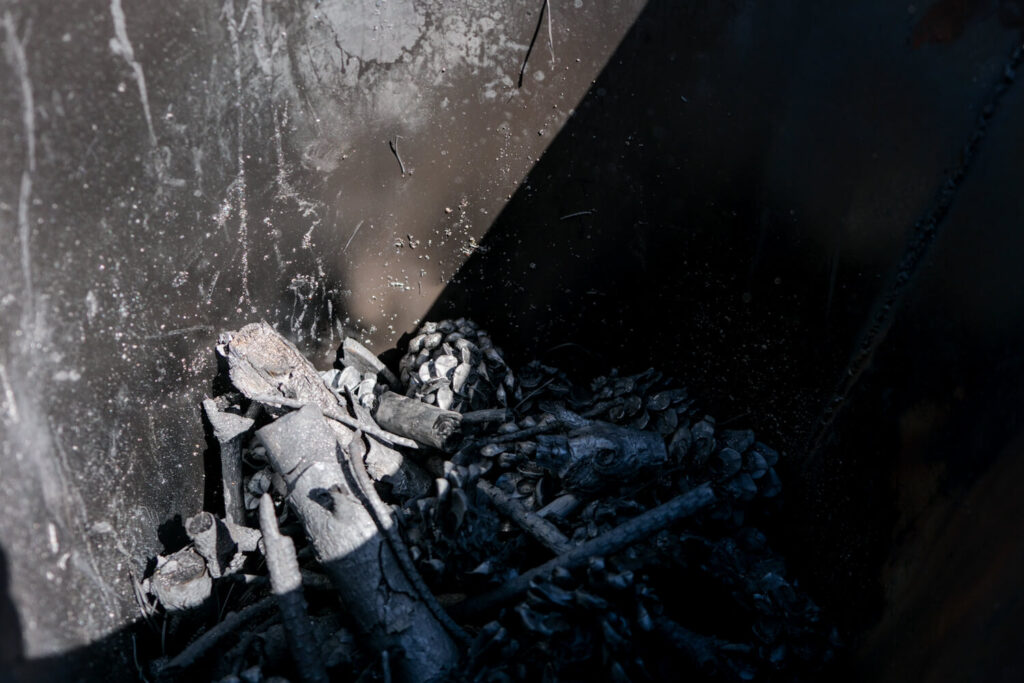
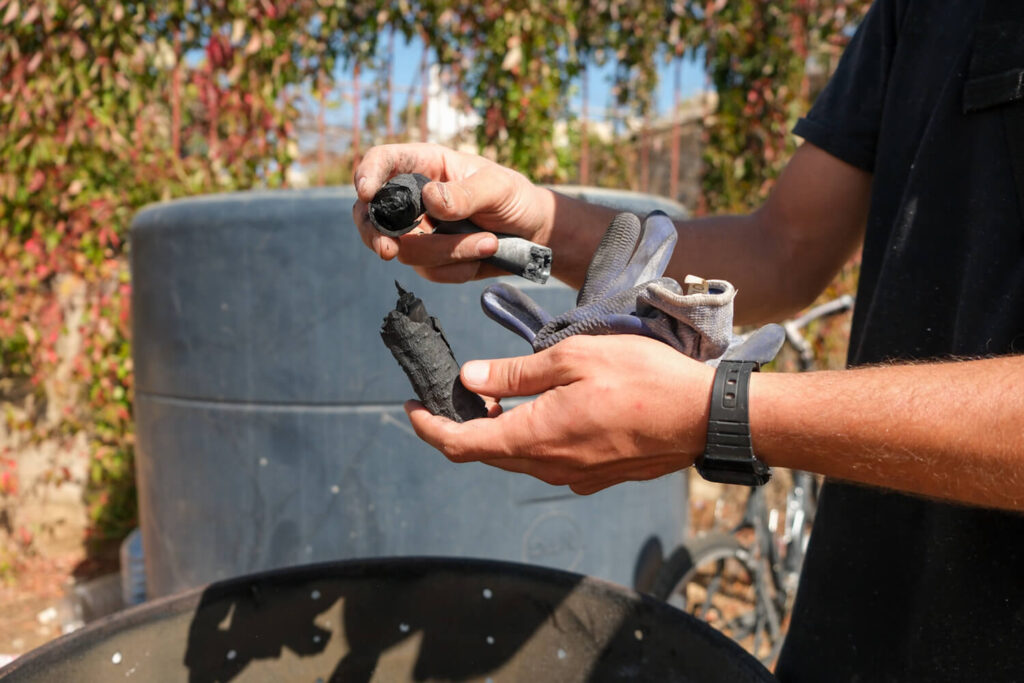
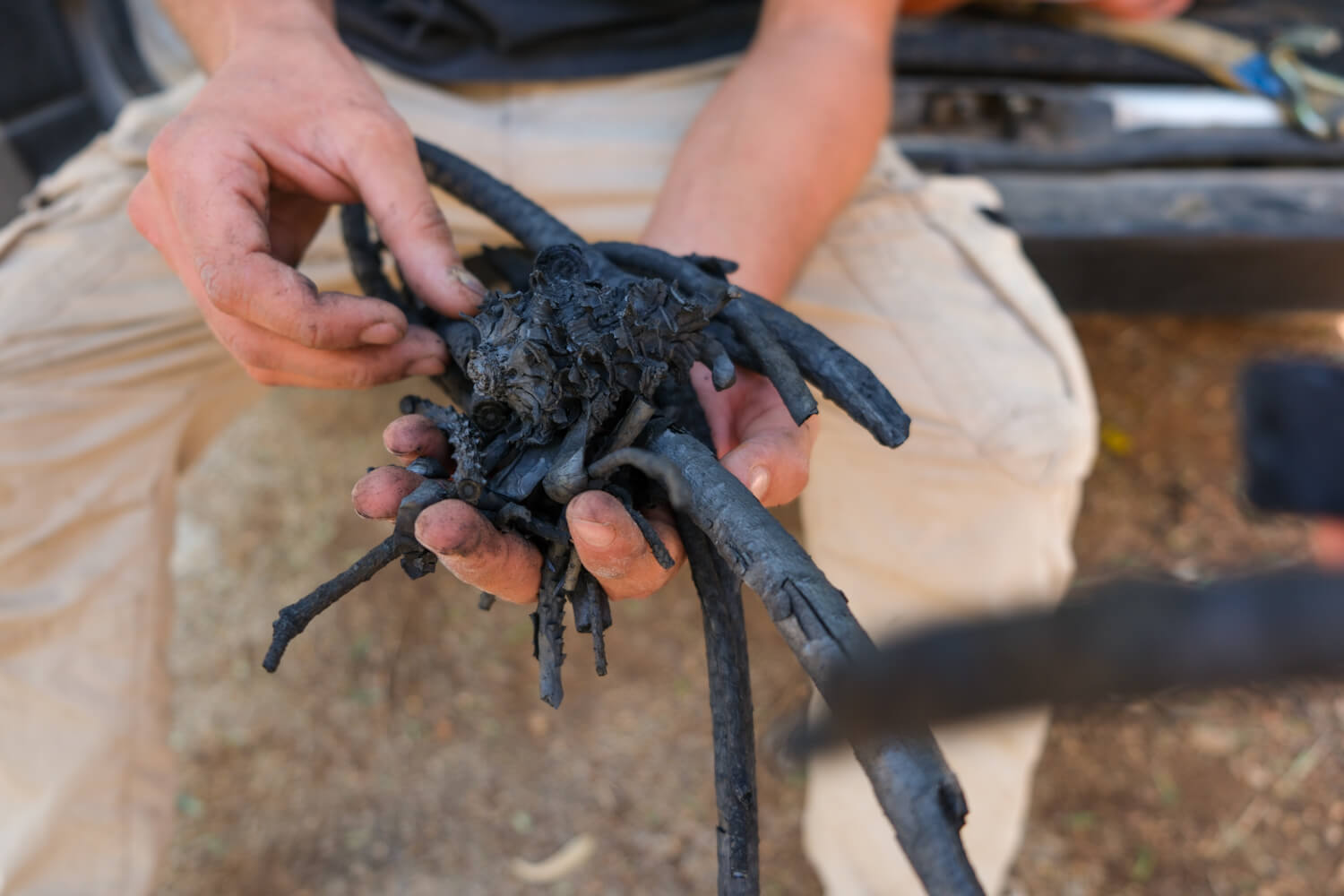
Hadi walks through the small garden to where a large metal barrel has been placed on the ground. He puts on a pair of thin gloves, grabs hold of the barrel, and starts emptying its contents into a bucket. One by one, chunks of charred pine cones and branches fall out, followed by a cloud of ashes.
The blackened pieces are biochar, a carbon-rich form of charcoal produced by burning different kinds of organic matter. This is the reason why Hadi came to Kfarkela today. When added to the soil, the biochar will help detoxify the contaminated land.
“I’ve made this biochar from what used to live in our garden. I’m working on bringing back life to land that has been attacked,” he says.
As he empties the barrel, a sharp buzzing sound suddenly fills the air. It is the familiar noise of a drone, flying low in the sky. The Israeli army has used drones to monitor Lebanon since the beginning of its attacks.
The drone moves closer and starts to circle above Hadi’s head, breaking the otherwise total silence. There is no one else around. All neighboring houses have been destroyed by bulldozers and detonations.
Suddenly, the sound of a massive blast cuts through the air, as if a bomb had landed in the garden next door. It is a so-called sound bomb, used to instill fear.
Hadi grabs the bucket of biochar, puts it in the back of his van, jumps in, and starts backing out of the garden. He closes the gate behind him, locks the doors of what was once a home surrounded by trees and flowers, and drives away from Kfarkela.
Hadi turns the broken pieces of trees and plants in the garden into biochar, to be used for bioremediation of the land
As he leaves the village, the buzz of the drone is drowned out by the sound of the van. Soon, it disappears. He keeps driving until he reaches a house overlooking patches of green and brown fields. This is where he has lived since the onset of the war. Near, yet far from home.
He parks outside and goes in to get something from the kitchen. It is filled with things from his home in Kfarkela: cups, pots, jars with last year’s mouneh.
“I’ve been collecting as much as I can from our house, whatever was not destroyed,” Hadi says.
In the living room, a collection of miniature toy soldiers has been placed on top of the fireplace, next to a broken piece of explosive. A poster hangs on the wall with a drawing of Hadi and one of his friends from a workshop on sustainable farming.
“These are all memories. I’m trying to create a place like our house in Kfarkela, a home that smells like my own home,” he says.
As a child, Hadi lived most of the year in Beirut but spent summers and weekends in Kfarkela, where his grandmother and uncles lived. The family grew crops like almonds, walnuts, peaches, pomegranates, and mulberries next to the house, and olives on a piece of land nearby.
“It was during these summers in Kfarkela that I became interested in the land, even though my interest in farming comes from its social, political, and ecological aspects,” Hadi says.
“I believe in talking about our land and history. I believe in that kind of resistance. Cultural resistance. We always resisted by only staying on our land.”
Hadi in his now-destroyed family home in Kfarkela
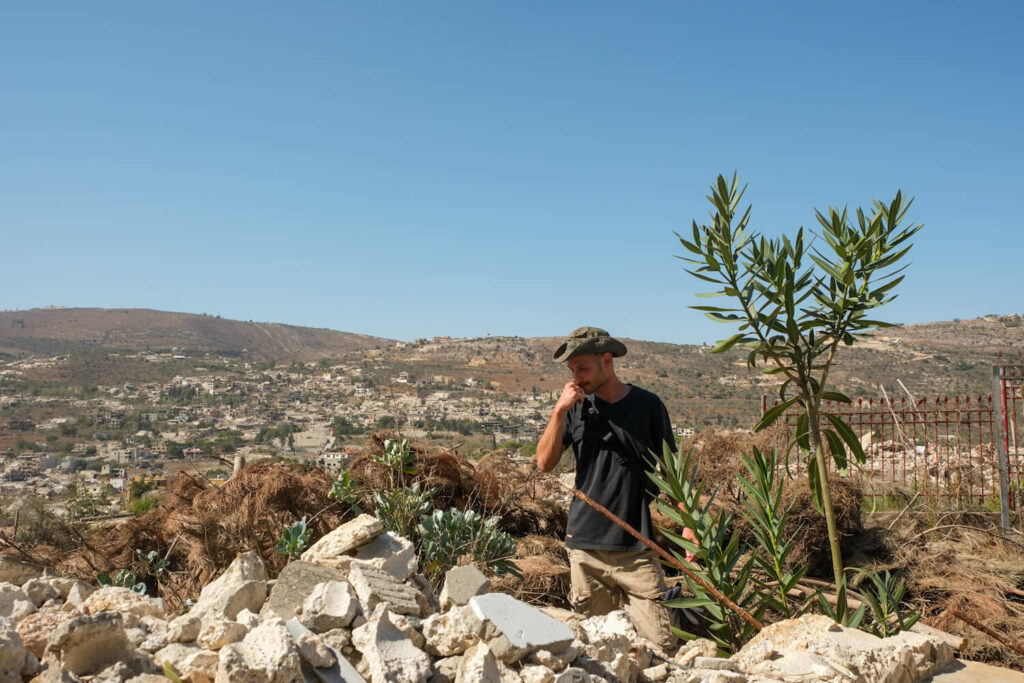
The idea of “sumud,” steadfastness or perseverance, has always been an important feature of the resistance to the occupation of Palestine, as well as of resisting oppression in southern Lebanon. Throughout the long years of Israel’s past occupation of the Lebanese south, families remained on their land, continuing to plant and harvest. In 2025, people did the same thing. Many came back and attempted to rebuild their lives in Kfarkela and other areas, even as the attacks continued.
Hadi walks back outside and starts unloading things from the van. His stay in this rented house is temporary – he has no idea for how long.
“I knew immediately when everything started that it was going to be a long war. I also knew that we had to find ways to save the land that was being destroyed,” he says.
For Hadi, that meant resorting to bioremediation, an approach that uses biological agents – fungi, plants, microorganisms – to neutralize or remove dangerous things from the soil.
“Bioremediation is about nourishing the soil in order to give it its immune system back. It heals the land in natural ways,” he says.
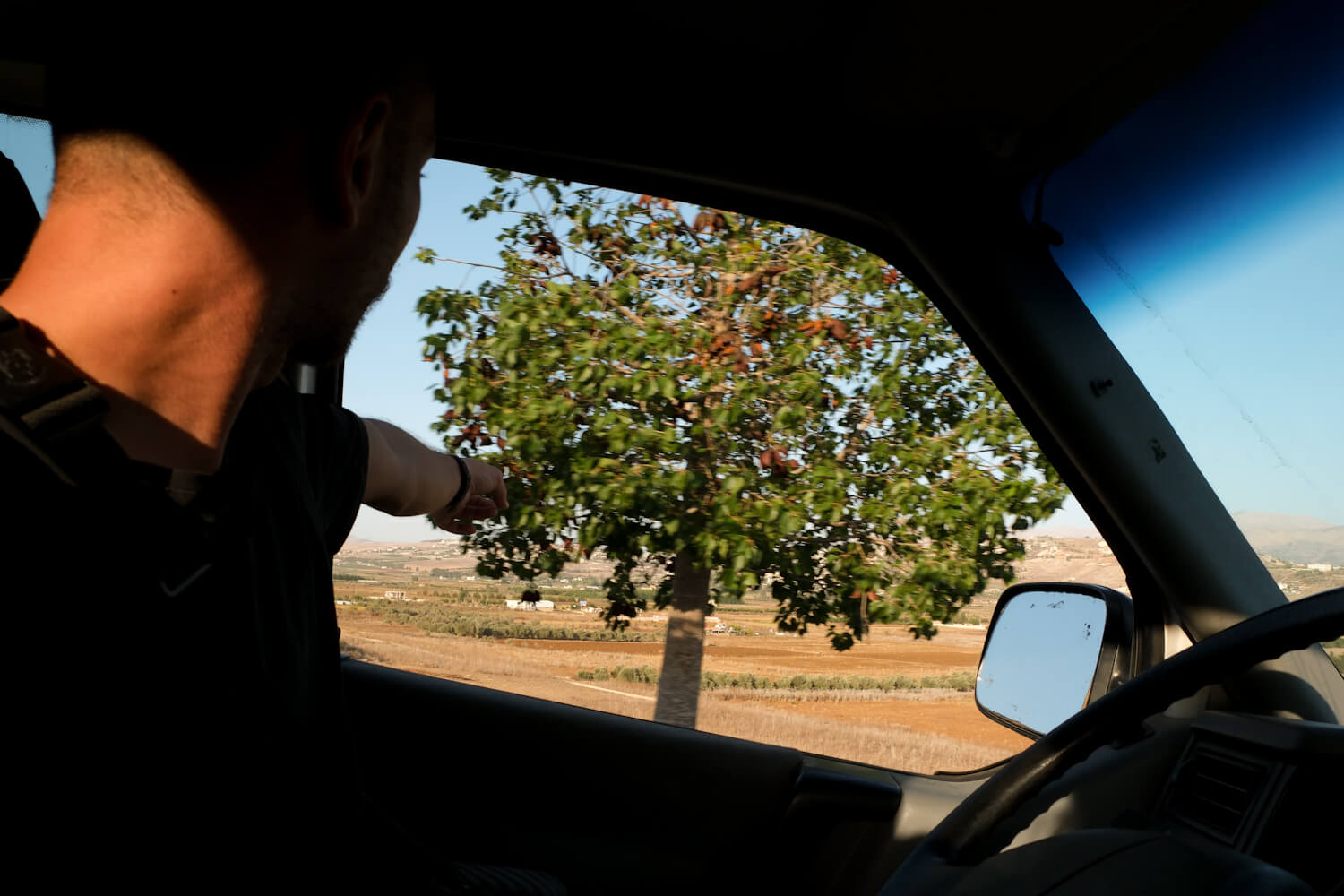
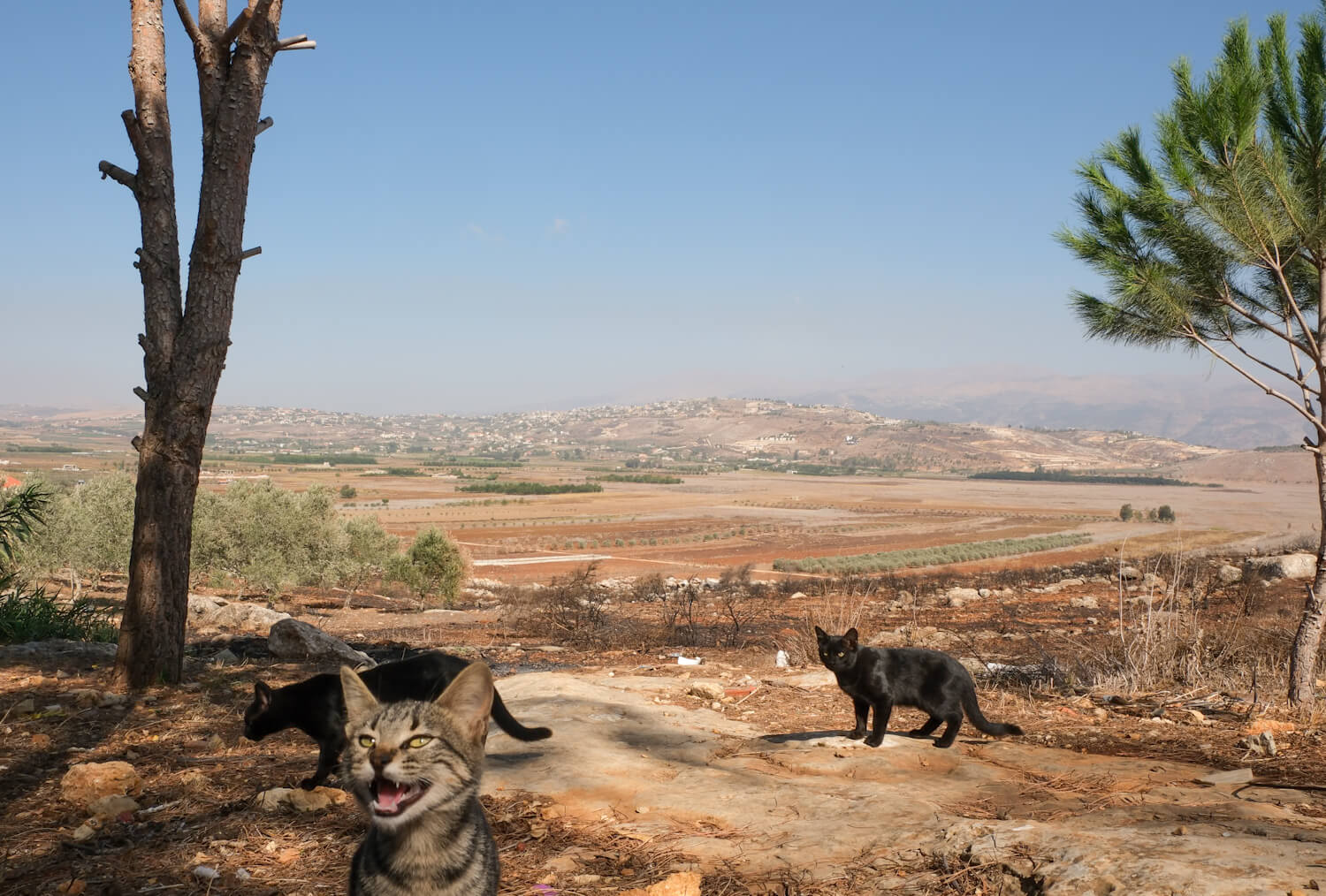
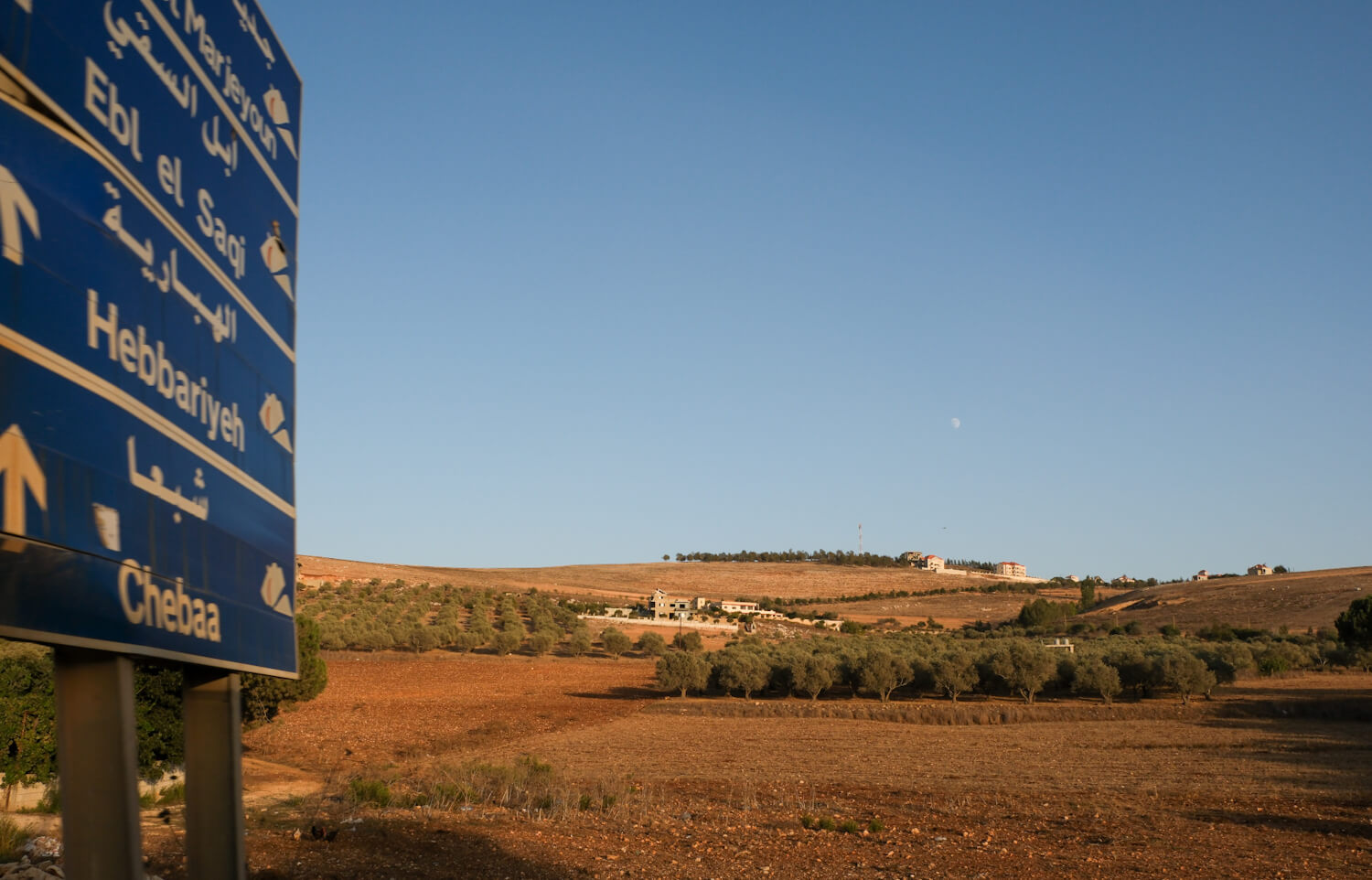
Driving through the area near Kfarkela, where Hadi spent weekends and summers
One way is using biochar, which functions as a natural filter to absorb toxins, chemicals, and heavy metals in the soil.
“Biochar has been used in many different places and contexts. In Russia, for example, after oil spills, and in Ukraine and Bosnia, where land was degraded by war,” Leila Darwich, an educator and bioremediation specialist who has been working with Hadi, says.
“The beautiful thing is that it moves us away from thinking in terms of ‘what’s the problem and how can we kill it.’ Bioremediation is about letting good organisms outcompete bad ones,” she says.
Hadi also uses compost, made from what can be found in the local area, and mixes it with the biochar. This way, microorganisms that are native to the soil can help restore stressed and damaged lands. This approach is different from the one used in conventional farming, where external inputs, like chemicals and pesticides, are brought in. Rather than salvaging the soil, these contribute to stressing and degrading it.
Hadi grabs a handful of biochar from the bucket in the back of his van. The pieces are light, weighing almost nothing.
“It’s always good to do bioremediation, no matter what. Even before the war, we had degraded lands. We were killing the soil with our practices,” he says.
“Civilizations before us saw this and had their different ways of managing it,” Hadi says.
Indeed, biochar is far from a new invention. The practice is based on indigenous knowledge dating far back in history. Carbon-rich organic matter was used in intentional ways by people living in the Amazon basin to enrich the soil and improve its quality. Layers of fertile soil known as “black gold” or “Amazonian dark earth” can still be found in this region. Knowledge of biochar, however, like so much indigenous wealth, vanished with the arrival of Columbus, which marked the beginning of a “great dying,” when 56 million indigenous people were killed across the Americas.
Across cultures and civilizations, soil itself has always held particular importance. Earth has been seen as a feminine deity, connected to fertility and the birth of people, plants, and animals. The Vedas, some of the oldest texts in the world, depict Earth as a mother figure and humanity as her offspring.
The same is true in Mesopotamian stories, which say that the first human was created from clay, and in Ancient Egyptian beliefs, according to which man was formed on the potter’s wheel. Greek and Roman texts also saw Earth as “the mother of all” – even if Greek mythology generally preferred prophecy linked to heaven and not earth.
More than half of all species on the planet live in the soil, which is more biodiverse than any other habitat on Earth
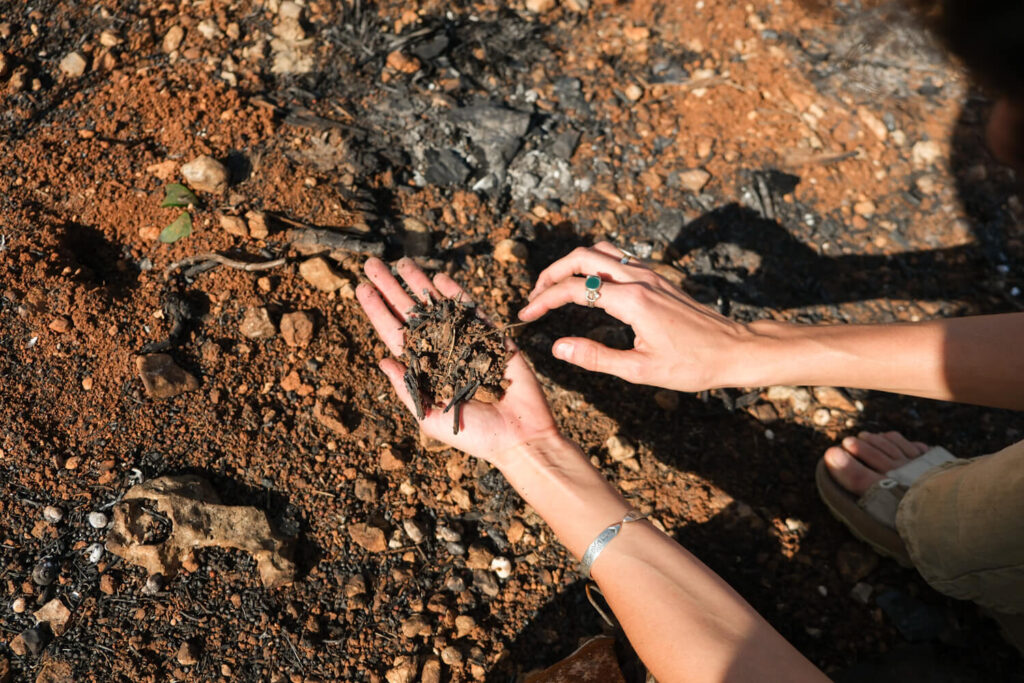
Across religions, soil remains linked to human life. The Bible says that “you are soil, to the soil you will return.” The custom of repatriating remains of those who died in a foreign land has been practiced since at least classical Greece, perhaps earlier. Soil is worshipped or revered in different Hindu rituals, including plowing and making clay lamps. Hindu sadhus, holy people, smear themselves with ashes as a way to symbolize their renunciation of the material world. Gestures of putting soil and ashes on oneself appear in other religions as well, including Judaism and Christianity.
In very practical terms, soil is what forms the topmost layer of our planet. As opposed to dirt, it is not stagnant or dead. Soil is filled with life. In fact, it is the single most biodiverse habitat on Earth, more so than all rainforests combined. In one teaspoon of soil, there are more microorganisms than there are people on Earth.
“Soil is not something that is just found there. No, it took millions of years for it to become what it is today,” Hadi says.
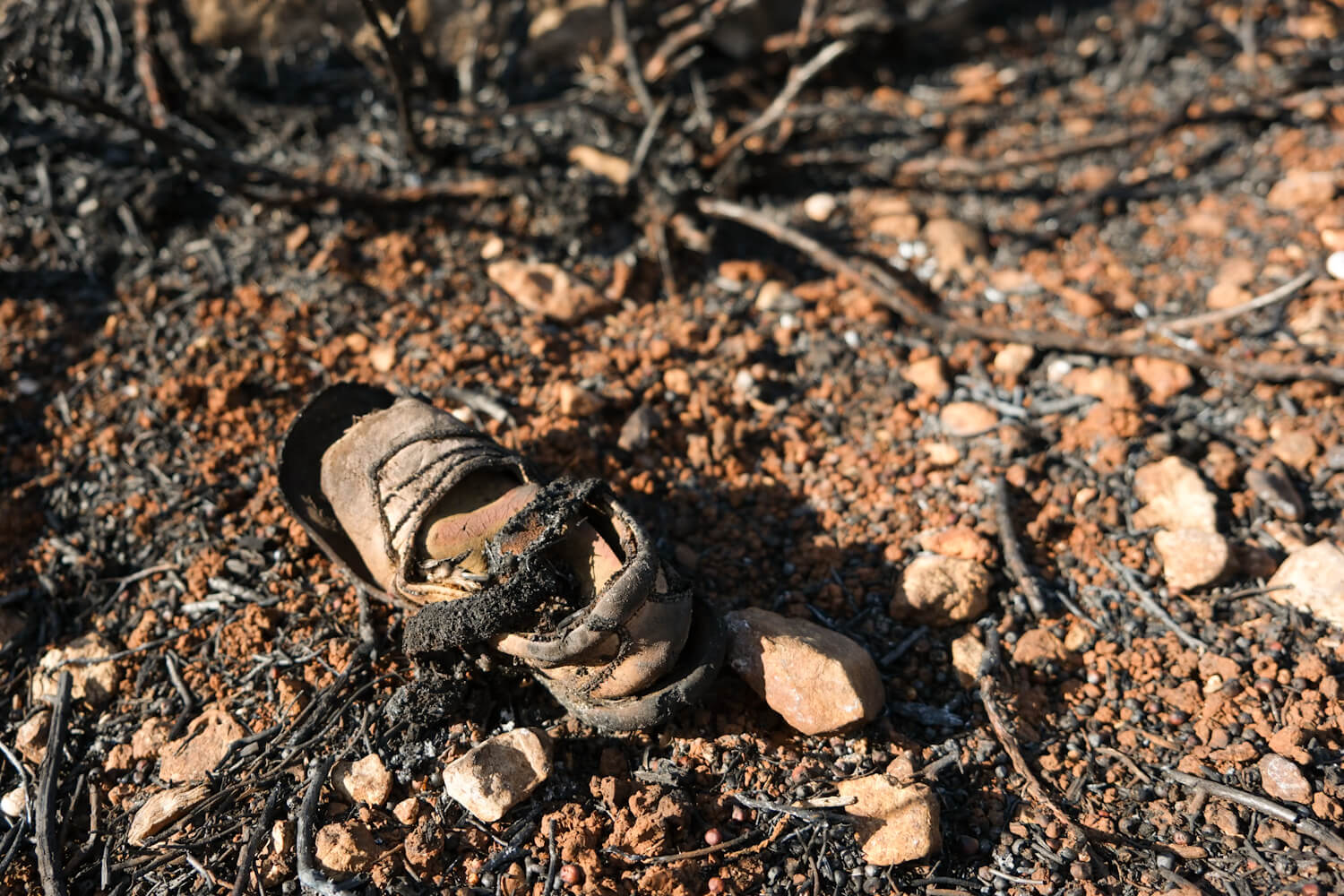
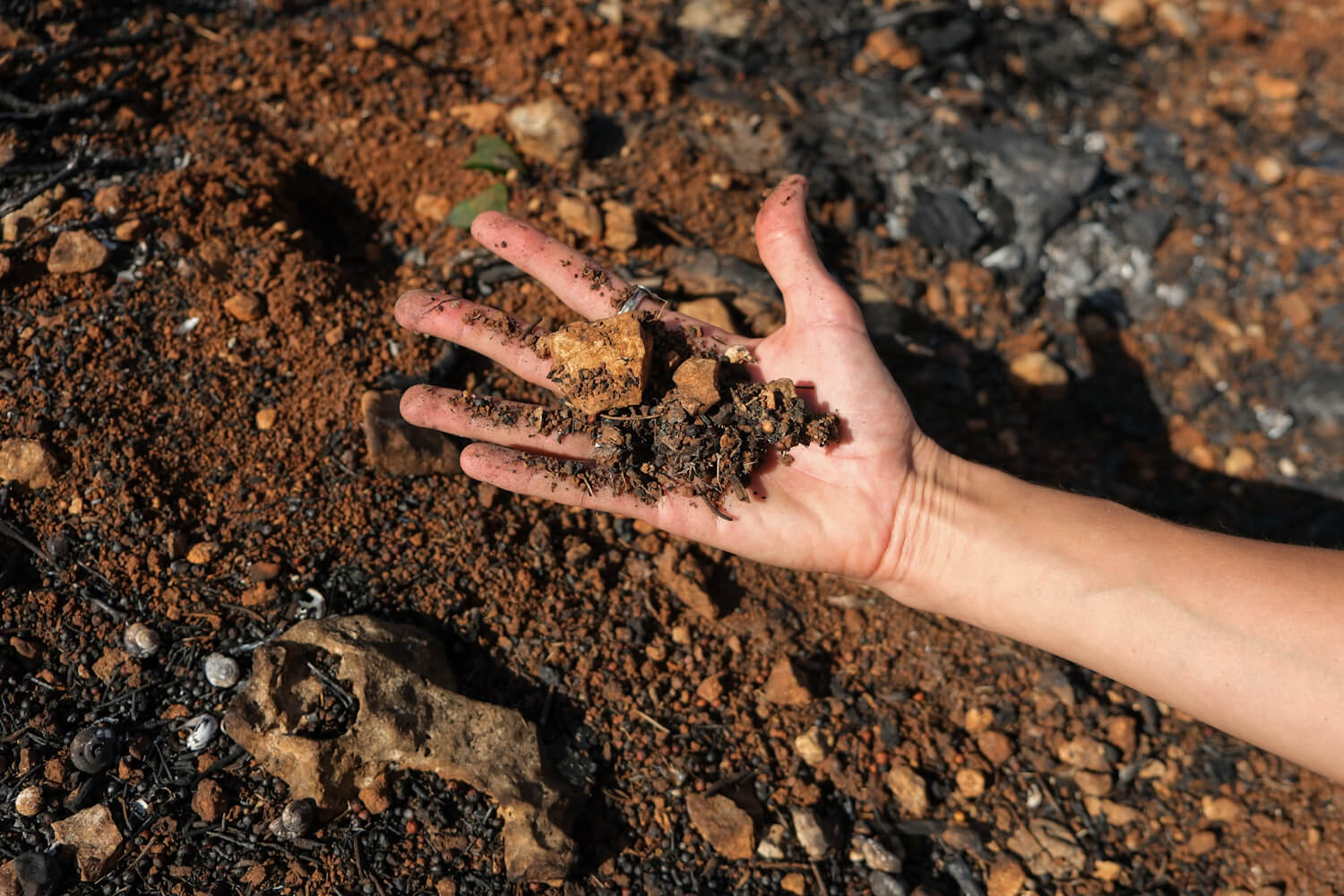
Burned land that was attacked by the Israeli army
Last year, an exhibition at Somerset House in London asked people to think of soil in relation to human life. Soil, it said, is “a secret world at our feet, an ecosystem as diverse in life as our night sky is full of stars.” Our relationship with soil, the exhibition said, is “our connection to Earth itself. Without soil, there is no us.”
Soil is also one of the world’s most vulnerable resources. It is affected by climate change, land degradation, and losses in biodiversity – and, as is the case in southern Lebanon, destructive conflict. A recent study shows that around one third of the planet’s land is severely degraded. What is more, the process of deterioration is ongoing: we are losing healthy soil much faster than it is being recovered.
The destruction of land by Israeli attacks since October 2023 has been extensive. After months of intense conflict, a ceasefire came into effect in late 2024, but it continues to be broken. ACLED, an independent monitoring body, counted 1,846 Israeli attacks one year after the ceasefire began; the UN interim force documented 10,000 violations in the same period, including ground activities and breaches of airspace. In November 2025, less than one year after the ceasefire, the UN reported that 127 civilians had been killed. Human Rights Watch documented the systematic targeting of reconstruction efforts in southern Lebanon, including residential buildings, showrooms, and facilities for bulldozers and excavators.
In the Nabatieh district, where Kfarkela is located, 27 percent of educational institutions, 82 percent of public electricity facilities, and 33 percent of water facilities have been damaged. The environmental losses across the country’s south, the Bekaa Valley, and elsewhere are immense. World Bank figures (from November 2024, before the ceasefire) estimate $221 million in damage to the environment and $124 million in damage to agriculture.
Across the south, Israel uses white phosphorus, a highly reactive substance that ignites in air and causes severe burns and respiratory damage. It can reduce land productivity and leave toxic residues that persist for years. This is not the first time Israel has used white phosphorus in Lebanon: the American University of Beirut documented multiple previous occurrences, including in 1982, 1993, 1996, and 2006. Public Works, a multidisciplinary research and design studio, monitored 272 attacks on Lebanon in which Israel used white phosphorus.
“The towns along the border and their forests received the largest share of attacks,” Rayan Alaeddine, a researcher with Public Works, says.
“These are areas classified as having agricultural wealth of national importance, and valleys, forests, and areas of natural connectivity.”
White phosphorus is not the only danger posed to southern Lebanon. Many other toxic and harmful substances remain in the land after Israel’s attacks, such as chemicals from coatings, plastics, paints, and adhesives, as well as contaminants from damaged vehicles, solar panels, fuel storage facilities, and other sources.
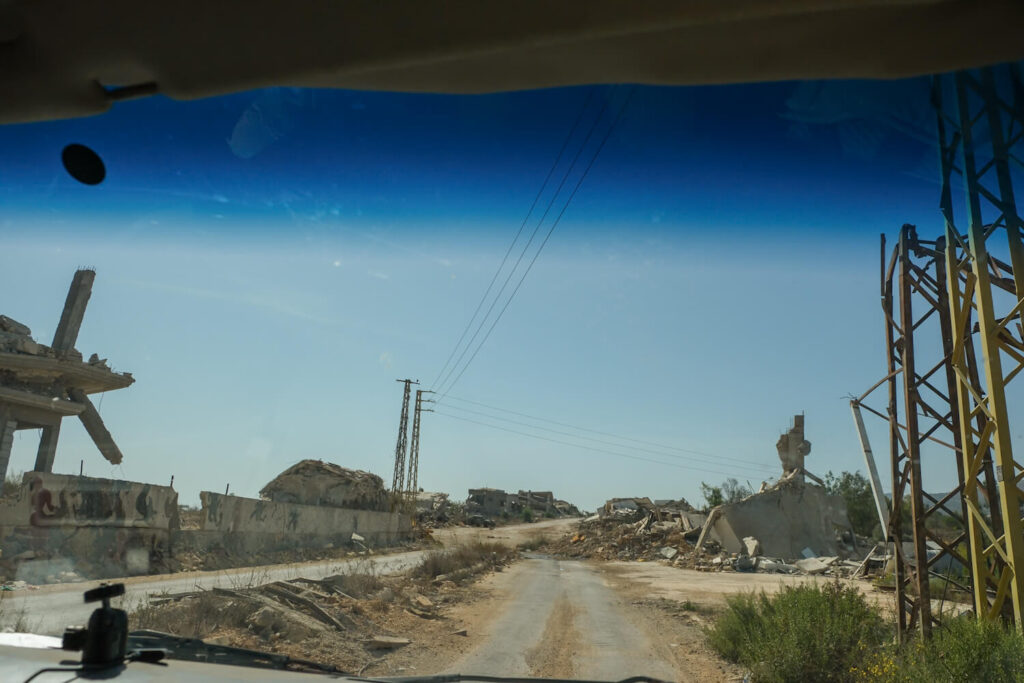
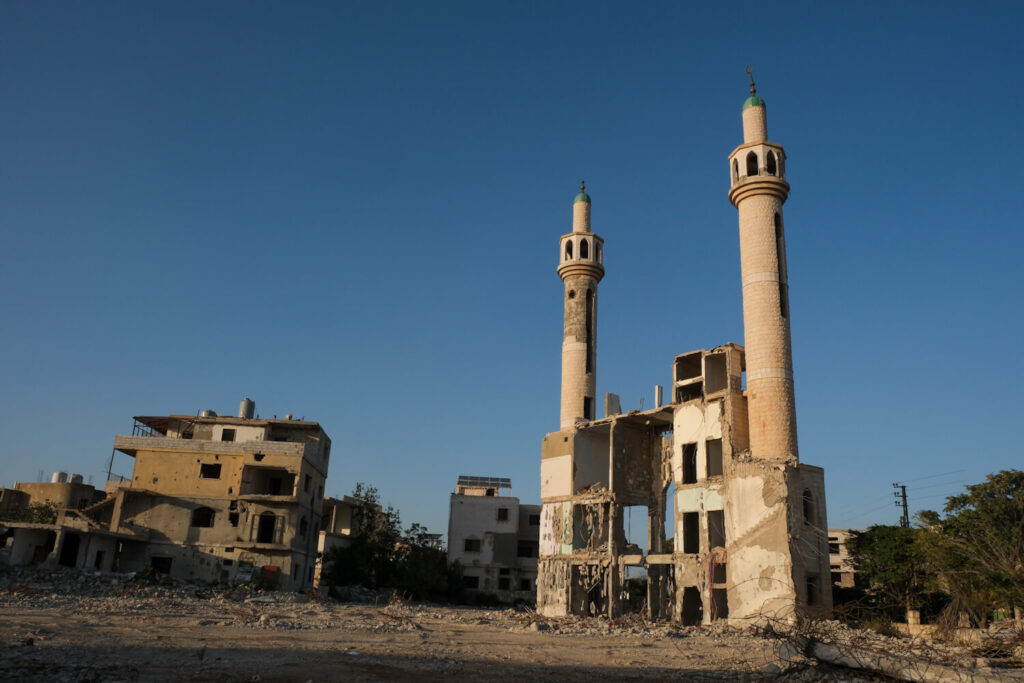
The entrance to Kfarkela, the destroyed mosque in nearby Khiam, and Hadi’s family home in Kfarkela
Hadi walks over to a chair placed in the shade of a large tree and sits down. In front of him are wide fields, stretching all the way to the town of Khiam in the distance. The valley resembles a large lake, but filled with greenery instead of water.
Suddenly, a sharp light appears in the sky above Khiam and falls toward the ground with a tail of pale smoke. It is a light bomb, dropped by the Israeli army.
“We have seen rockets and missiles dropped right in front of us from the very beginning,” Hadi says.
A section of the valley in front of him has not been planted this year. The ground is bare, lifeless. It is too close to the border for farmers to risk going there.
“People just want to live. This is a farming region, and farmers just want to take care of their land,” Hadi says.
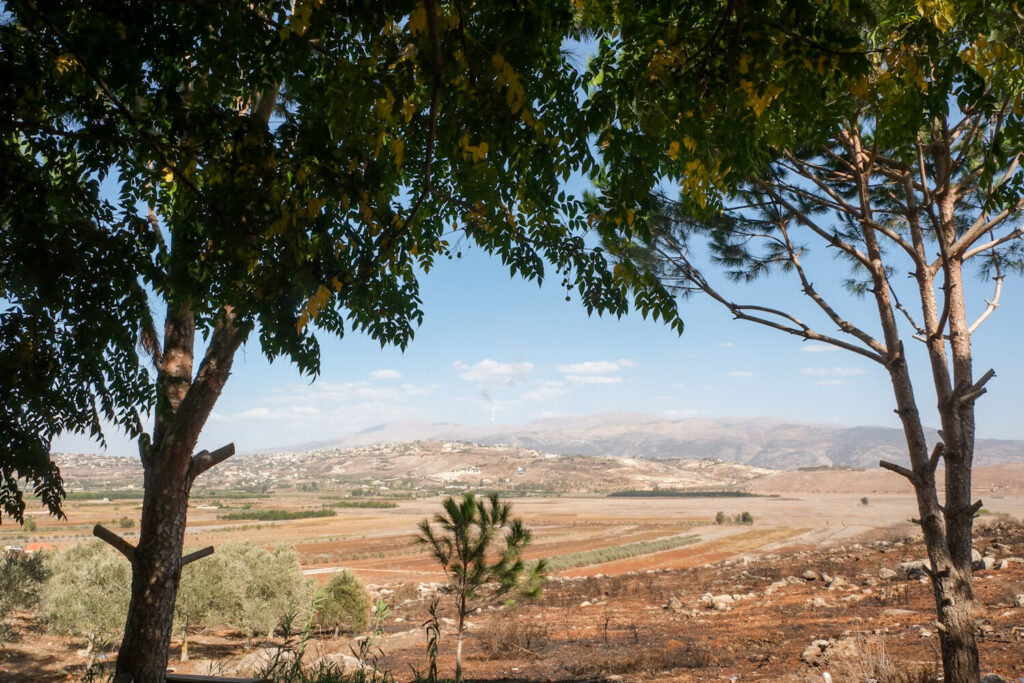
A light bomb is dropped on the nearby town of Khiam, seen from the garden where Hadi is staying
He takes out a paper with drawings and arrows and places it on the table. “The soil food web,” it says, outlining an underground network among trees, plants, and different living organisms.
“There’s a whole web underneath our feet where everything is connected. And all of these organisms in the soil have a purpose,” Hadi says.
The idea is that life-essential processes happen constantly beneath our feet, through an ongoing exchange of water, nutrients, and carbon among microscopic organisms such as fungi, bacteria, and tiny worms called nematodes.
“This is how the land works. In order for it to be healthy, you need the whole soil food web to work. Otherwise, things won’t grow,” Hadi says.
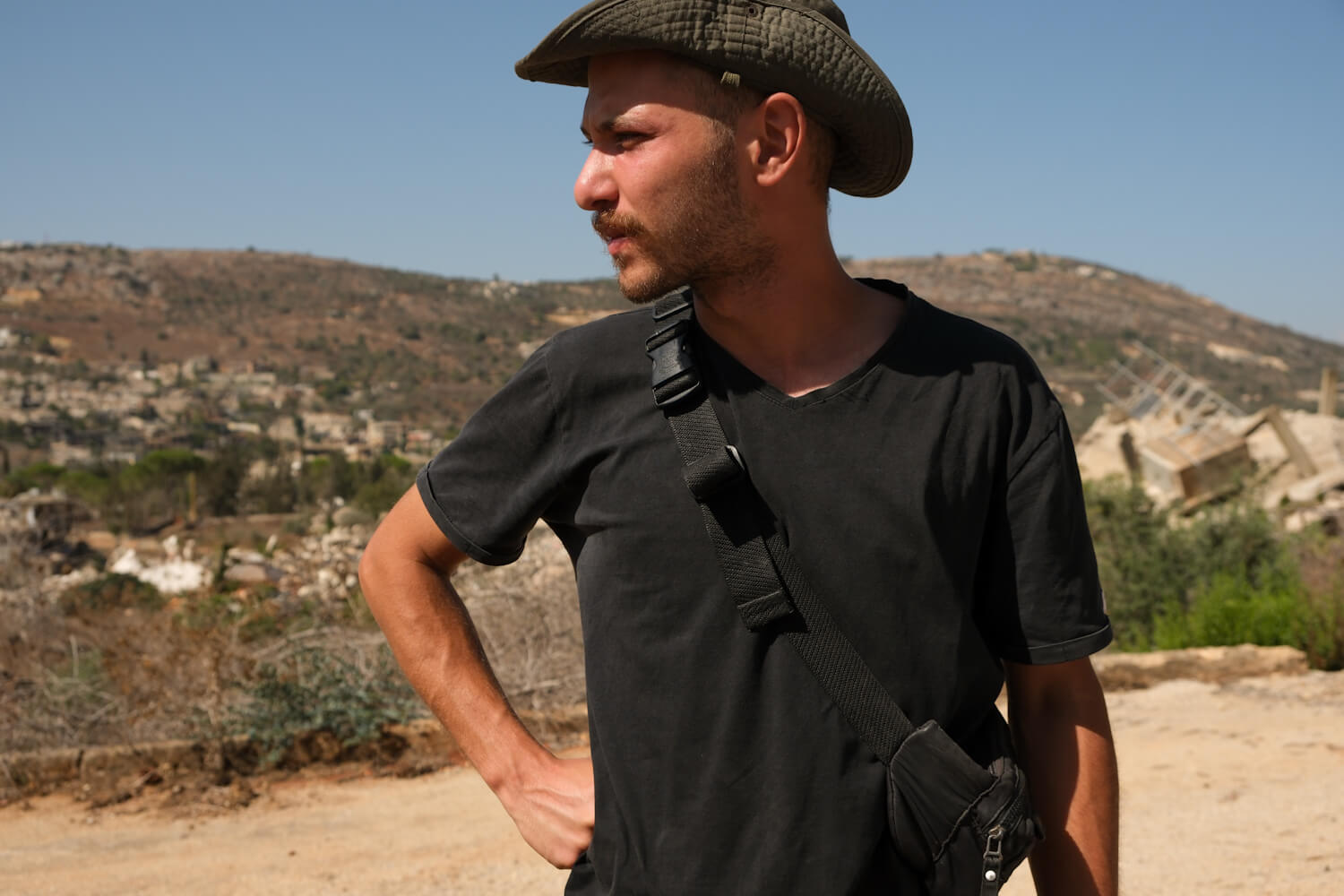
After many months of attacks on the south, this is what Hadi is trying to restore: the health of the land, with the help of biochar and other methods of bioremediation.
“That’s why I’m still here. That’s why I didn’t leave the south. I’m here to convince others to do this together. I’m not talking to people from a distance. We’re doing this together, risking this together,” he says.
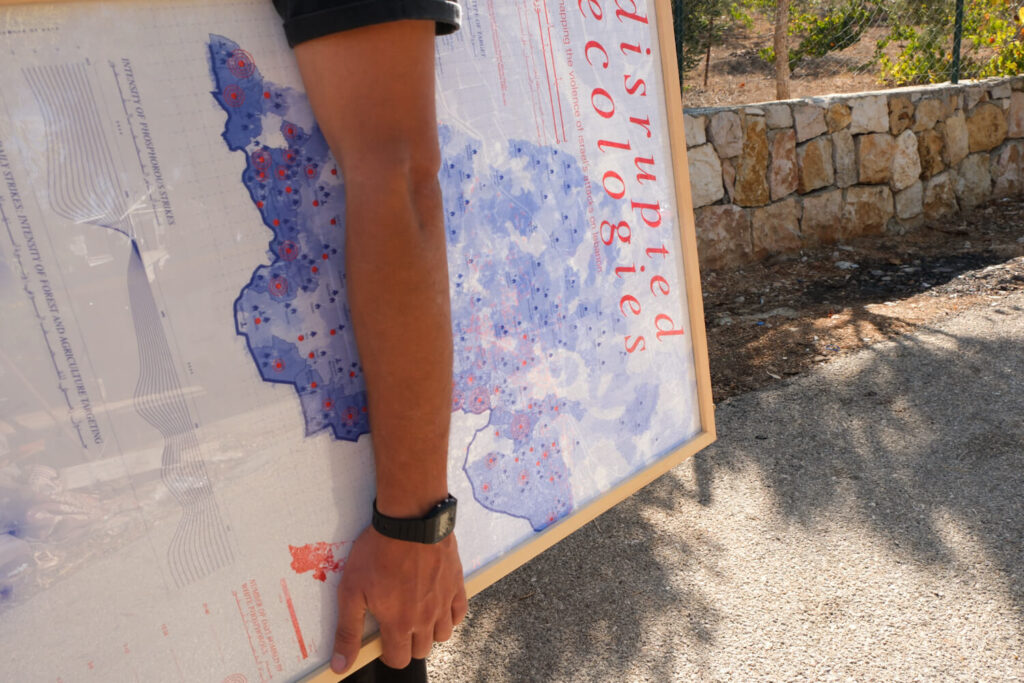
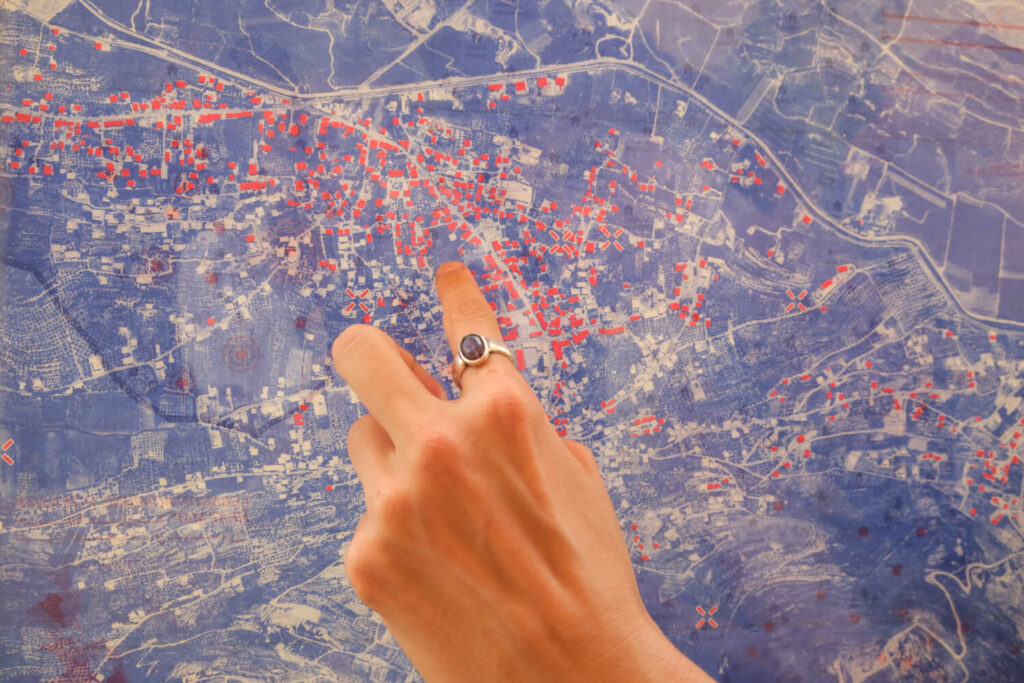
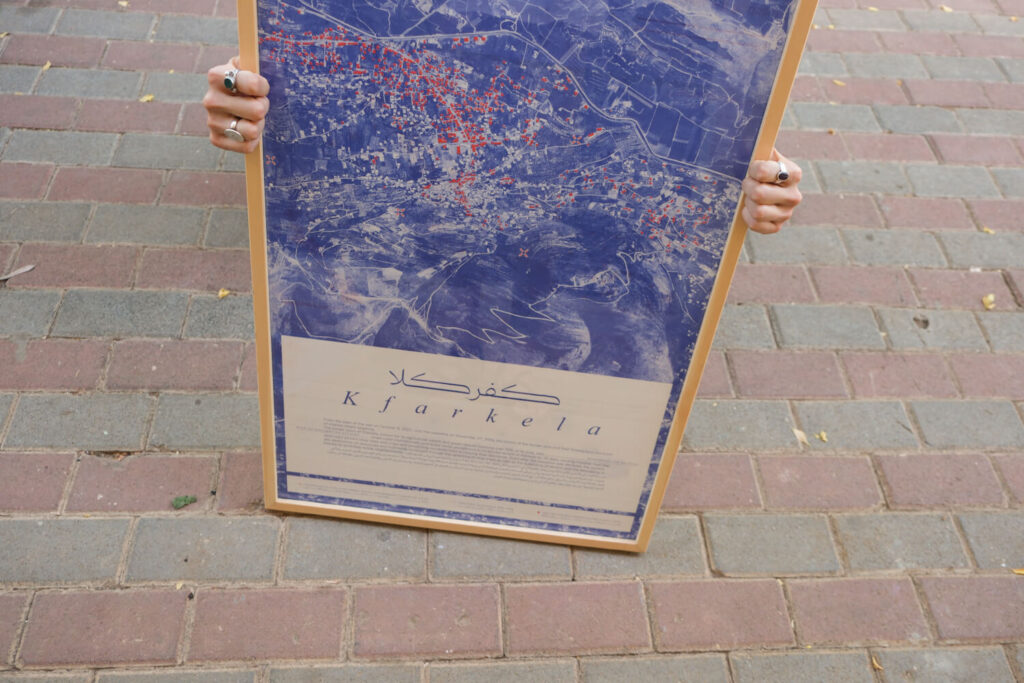
A mapping by Public Works, a research and design studio, shows the destruction of Kfarkela
A man comes out and sits down next to Hadi in the shade of the tree. He is the person Hadi rents the house from. They start talking about the history of the area. Not only was Palestine attacked in 1948, but Lebanese villages were also targeted by the newly established Israeli army. In Houla, some 10 kilometers away, more than 80 people were executed. In 1978, marking the beginning of what would become an occupation lasting 20 years, civilians were killed in many nearby towns and villages, including in Khiam on the other side of the valley (different sources report anywhere from 31 to 100 victims).
EPILOGUE
As we are publishing this, the Israeli army, with the military backing of several global powers and the tacit or outspoken approval of many others, is intensifying its attacks on South Lebanon. The area around Kfarkela, where this story of the magic of soil and land is set, is under bombardment once again and facing the beginnings of another ground invasion. In early March, as part of the US-Israel war on Iran, in which Hezbollah became involved following numerous violations by Israel of the ceasefire in place, the Israeli army issued yet another forced evacuation order, instructing people to leave a large part of Lebanon’s south. It was later extended, again using threats and force, and now includes nearly 1,500 square kilometers, or 14 percent of the country. More than one million people have been displaced from their lands and homes by the ongoing attacks. The immediate future of the south remains unclear. Hadi, whom we meet in this story, has once again been driven from his home: this time, not only his family house in Kfarkela, which had already been destroyed, but also the nearby home where he was staying.